










UI/UX Design
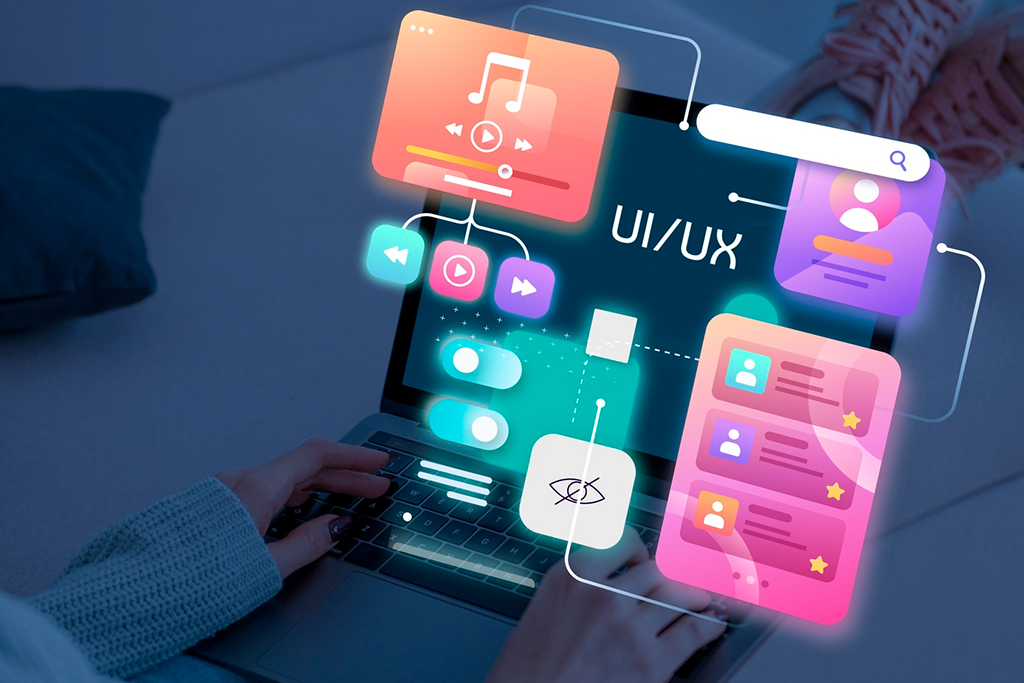
UI/UX design aims to create intuitive, user-friendly interfaces that improve the entire user experience. It blends aesthetics and functionality to help consumers explore a website or application. By emphasizing responsiveness, accessibility, and clarity, UI/UX design enables organizations to effectively engage with their audience and provide a seamless digital experience.
The approach includes extensive research, wireframing, prototyping, and iterative testing. Designers evaluate user behavior to build visually appealing and useful interfaces. A well-executed UI/UX design improves user pleasure, engagement, and conversions, making it critical for digital success.
Mobile App Development
Mobile app development is the process of designing, creating, and delivering programs that are optimized for mobile devices such as smartphones and tablets. It entails designing user-friendly interfaces, optimizing performance, and assuring interoperability with several platforms such as iOS and Android. Developers use cutting-edge technologies and frameworks to create apps that address specific business demands while providing seamless functioning.The process consists of steps such as conception, prototyping, development, testing, and deployment. Mobile apps increase user engagement by giving easy access to services and features. They also increase consumer loyalty and profitability through tailored user experiences. A well-executed mobile app may be a game changer for businesses trying to increase their digital presence.
E-Commerce Development
E-commerce development comprises establishing online platforms that allow businesses to sell products or services digitally. It includes creating visually appealing websites, integrating secure payment mechanisms, and guaranteeing user-friendly navigation. The goal is to provide a smooth shopping experience for mobile and desktop customers by including features like as product categorization, search capabilities, and responsive design.
A good e-commerce website also contains backend features such as inventory management, order tracking, and customer analytics. These qualities assist firms in understanding consumer behavior and optimizing their sales techniques. Companies can effectively compete in the digital marketplace by expanding their reach, increasing sales, and establishing a strong online presence with a well-designed e-commerce platform.
IOT Development
IoT development aims to create interconnected systems in which devices communicate effortlessly, share data, and automate activities. It entails creating hardware, building software, and integrating platforms for connecting sensors, devices, and cloud-based systems. This improves efficiency by allowing real-time monitoring, control, and data analysis in areas such as healthcare, manufacturing, smart homes, and agriculture.
IoT development's success depends on its ability to increase operational performance and decision-making. IoT systems can detect trends, automate reactions, and optimise resources by leveraging advanced technologies such as artificial intelligence and machine learning. With powerful IoT solutions, businesses may gain more scalability, save costs, and provide more tailored customer experiences.
AI/ML/DL Applications
AI, ML, and DL applications are revolutionizing businesses by enabling more intelligent, data-driven decision-making and automation. Artificial intelligence (AI) aims to create systems that can replicate human intelligence, whereas machine learning (ML) allows systems to learn from data and improve over time. Deep Learning (DL), a subtype of ML, uses neural networks to process large datasets, excelling at tasks like image identification, natural language processing, and predictive analytics.
From chatbots and virtual assistants to self-driving cars and enhanced medical diagnostics, these technologies are changing the way we work and live. Their capacity to analyze complicated datasets and uncover trends results in increased productivity, better customer experiences, and innovation across industries. As AI/ML/DL progress, they will provide unequaled potential for effectively addressing real-world difficulties.
Game Development
Game development is a dynamic process that results in intriguing and interactive digital experiences. It combines storytelling, art, programming, and sound design to produce games that entertain, educate, and inspire audiences. Developers use powerful game engines such as Unity or Unreal Engine to create and build games for a variety of platforms, including PCs, consoles, and mobile devices.
Every element of the game development process, from conceptualization to coding and testing, necessitates creativity and technical ability. Iteration is also used in game development to fine-tune gameplay, visuals, and performance. The goal, whether it's casual smartphone games or intense virtual reality excursions, is to provide people throughout the world with an outstanding experience.
DevOps Services
DevOps services are designed to streamline procedures, increase efficiency, and promote collaboration between development and operations teams. By automating the entire software delivery pipeline, DevOps promotes faster deployment and higher-quality products. It uses principles like continuous integration, continuous delivery (CI/CD), and infrastructure as code (IaC) to improve scalability, security, and performance.
DevOps enables firms to adapt fast to market demands and issue updates or fixes with minimal disruption. DevOps services optimize the software lifecycle by leveraging cloud infrastructure, containerization, and monitoring tools, ensuring stability and reducing downtime. This comprehensive approach promotes innovation while maintaining a high level of operational excellence.
Testing Services
Testing services are critical to guaranteeing the quality, functionality, and performance of software products. Businesses can detect defects, glitches, and vulnerabilities before deployment by running a variety of tests, including functional testing, regression testing, and performance testing. This proactive strategy reduces costly errors and ensures that the final product fulfills user expectations and requirements.
Furthermore, testing services are critical for improving the user experience and maximizing software performance. Testing services validate the system's ability to handle stress and retain functionality in a variety of situations. Automated testing technologies are commonly used to increase productivity, accuracy, and scalability. Businesses can verify the stability, security, and performance of their apps through extensive testing, resulting in increased consumer trust and pleasure.